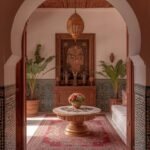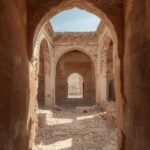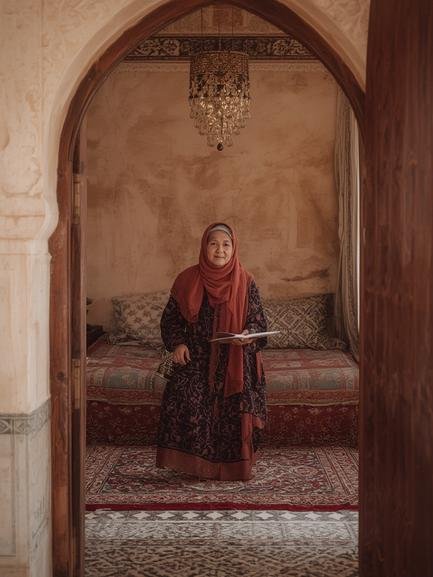

Morocco’s charming capital provides a perfect introduction to North African culture while being considerably more relaxed than other cities in the country. Rabat women solo travel experiences are increasingly popular as female travelers discover the city’s welcoming atmosphere, stunning architecture, and rich cultural heritage. Unlike the hustle of Marrakech or Fes, Rabat offers a gentler pace that allows women to explore with greater ease and comfort.
The city’s combination of modern infrastructure alongside women traveling Morocco friendly spaces makes it an ideal destination for those seeking both adventure and security. With its UNESCO World Heritage sites, beautiful beaches, and vibrant medina, Rabat deserves a spot on every solo female traveler’s itinerary.
History & Cultural Background

Rabat’s fascinating history dates back to the 12th century when it was established as a fortress by the Almohad ruler Abd al-Mu’min. The city’s name derives from “Ribat al-Fath,” meaning “Fortress of Victory.” Through centuries of evolution, Rabat has been shaped by various dynasties including the Almohads, Merinids, and most significantly, the Alaouite dynasty, which continues to rule Morocco today.
In 1912, during the French Protectorate period, Rabat was designated as Morocco’s capital, a status it maintained after independence in 1956. This colonial influence is visible in the city’s layout, with its wide boulevards and European-style architecture alongside traditional Moroccan elements. The historic heart of Rabat, including the Kasbah of the Udayas, Medina, Hassan Tower, and Mohammed V Mausoleum, was recognized as a UNESCO World Heritage Site in 2012.
For women travelers, understanding Rabat’s position as Morocco’s administrative and diplomatic center helps explain its relatively progressive atmosphere compared to other Moroccan cities. The significant presence of international organizations, embassies, and universities contributes to Rabat’s cosmopolitan character.
Architectural Highlights & Key Features
Rabat’s architectural landscape offers a fascinating blend of Islamic, Andalusian, and French colonial influences that create a visually stunning urban environment. The Kasbah of the Udayas stands as one of the most picturesque spots in the city, with its blue and white washed walls reminiscent of Greek islands, offering spectacular views over the Atlantic Ocean and Bouregreg River.
The incomplete Hassan Tower, begun in the 12th century, represents Almohad architectural ambition with its intricate stone work and imposing presence. Nearby, the Mohammed V Mausoleum showcases exquisite Moroccan craftsmanship with its zellige tile work, carved cedar ceilings, and marble columns.
The Chellah, a medieval fortified Muslim necropolis built on ancient Roman ruins, offers a unique historical layering rarely found elsewhere. Its gardens, populated by storks nesting atop ancient walls, create a magical atmosphere.
The Royal Palace (Dar al-Makhzen), while not open to the public, impresses visitors with its magnificent entrance and ornate details visible from the esplanade. The newer parts of the city feature Art Deco and Modernist buildings from the French Protectorate era, particularly in the Ville Nouvelle district.
Best Time to Visit & Practical Information
The ideal time for exploring Rabat is during spring (April to May) and fall (September to October) when temperatures are comfortable, ranging from 65-75°F (18-24°C). Summer months (June to August) can be hot but are moderated by Atlantic breezes, while winter (November to March) brings occasional rain but mild temperatures around 50-65°F (10-18°C).
Most historical sites operate from 9:00 AM to 6:00 PM, though the Hassan Tower and Mohammed V Mausoleum complex closes for Friday prayers. The Kasbah and medina can be explored at any time, though shops typically close by early evening.
Entrance fees are reasonable: the Kasbah Museum costs approximately 20 MAD ($2 USD), Chellah about 70 MAD ($7 USD), and many sites like Hassan Tower and public gardens are free to enter.
Regarding transportation, Rabat has an efficient tram system (6 MAD per ride) connecting major areas, and petit taxis are abundant and affordable (use the meter). For intercity travel, the train station connects Rabat to major Moroccan cities with frequent departures.
While Rabat is relatively progressive, respectful dress is appreciated – shoulders covered and knee-length or longer bottoms are recommended, especially when visiting religious sites.
Step-by-Step Exploration Guide
Begin your Rabat exploration with the Kasbah of the Udayas, ideally in the morning light when its blue and white walls shine brightest. Enter through the impressive 12th-century Almohad gate and wander the narrow streets, stopping at the Andalusian Garden for a peaceful moment. The Kasbah offers perfect photo opportunities and a safe environment for Rabat women solo travel enthusiasts. Don’t miss Café Maure for traditional Moroccan mint tea with river views.
Next, head to Hassan Tower and Mohammed V Mausoleum, about a 15-minute walk away. These sites, often staffed with guards and guides, are particularly comfortable for women traveling Morocco alone. Spend an hour exploring the tower’s esplanade and the beautifully decorated mausoleum interior.
After lunch, explore Rabat’s medina – significantly less crowded and pushy than those in other Moroccan cities. Enter from Avenue Mohammed V and follow Rue Souika for the main shopping street. The smaller size makes it difficult to get lost, and women travelers generally report feeling comfortable here even alone.
In the late afternoon, visit Chellah for its magical atmosphere and interesting blend of Roman and Islamic architecture. The gardens are particularly beautiful in the golden hour light.
Finally, end your day with a sunset stroll along the Bouregreg River to the modern Rabat marina, where you’ll find contemporary restaurants and a more international atmosphere.
Nearby Attractions, Food & Accommodation
Within a day trip from Rabat, consider visiting Salé across the river for its authentic medina or the beach town of Témara for Atlantic relaxation. The Roman ruins of Volubilis make an excellent excursion about 1.5 hours away.
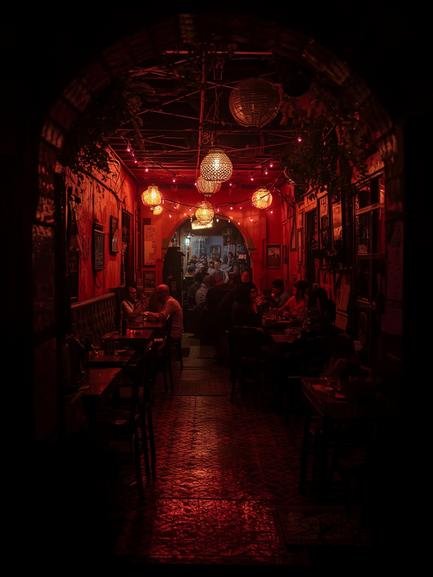
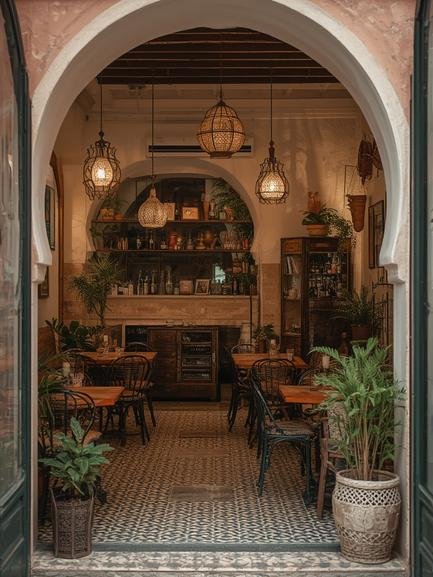
For dining, L’Annexe in the city center offers excellent French-Moroccan cuisine in a comfortable setting where solo diners feel welcome. Dar Naji near Parliament serves traditional Moroccan dishes in a beautiful setting. For casual meals, try Yamal Acham for delicious Middle Eastern food or Le Dhow, a boat restaurant on the Bouregreg River with stunning views.
Accommodation options span all budgets. Luxury travelers should consider Sofitel Rabat Jardin des Roses or Hotel La Tour Hassan Palace. Mid-range options include Riad Dar El Kebira in the medina or Hotel Mercure Rabat Sheherazade. Budget travelers can check out Medina Hostel or Dar Yanis, both offering female-only dorms and private rooms in safe locations.
Travel Tips & Common Mistakes to Avoid
When visiting Rabat as a solo female traveler, avoid walking alone late at night, particularly in isolated areas. Instead, use petit taxis which are affordable and safe.
Don’t forget to negotiate taxi fares or insist on using the meter before entering the vehicle. Agreeing on prices beforehand prevents misunderstandings.
Many travelers make the mistake of dressing inappropriately. While Rabat is more relaxed than other Moroccan cities, respecting local customs with modest clothing reduces unwanted attention.
Avoid scheduling your visit on Fridays before 2 PM when many sites are closed for prayers. Similarly, during Ramadan, business hours may change significantly.
Don’t exchange money at the airport or hotels; official exchange bureaus in the city offer better rates. ATMs are widely available but inform your bank before traveling.
For photography, always ask permission before taking photos of people, particularly women. Some locals may request a small tip for photos.
Learn basic French phrases as English is less widely spoken outside tourist areas. Even simple greetings in Arabic like “Salam” (hello) and “Shukran” (thank you) are appreciated.
Conclusion
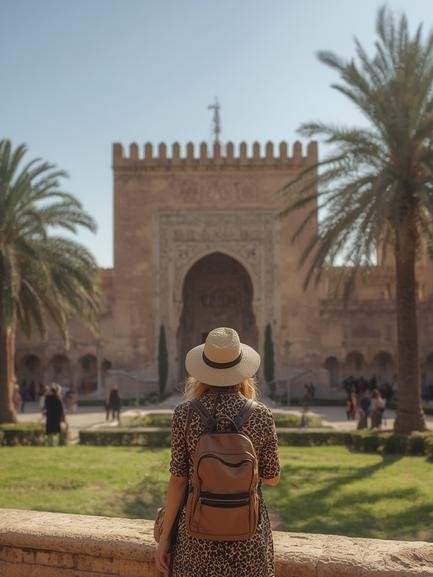
The unique combination of historical richness, cultural authenticity, and relative tranquility makes Rabat women solo travel experiences some of the most rewarding in North Africa. The city offers a perfect introduction to Moroccan culture without the overwhelming intensity found in other destinations. With its walkable neighborhoods, reliable public transportation, and generally respectful atmosphere, Rabat provides an excellent balance of adventure and comfort for female travelers. The growing community of women traveling Morocco continues to share positive experiences about the capital city. Whether you’re drawn by the stunning architecture, the delicious cuisine, or the seaside ambiance, Rabat rewards those who take the time to discover its charms. Pack your camera, bring your curiosity, and prepare to create unforgettable memories in Morocco’s elegant capital city.
FAQs
Is Rabat safe for women traveling alone?
Yes, Rabat is generally considered one of the safest Moroccan cities for solo female travelers. As the administrative capital, it has a significant police presence, good infrastructure, and less aggressive tourist attention than cities like Marrakech or Fes. Basic precautions like avoiding isolated areas at night and dressing modestly are still recommended.
How many days do I need to explore Rabat properly?
Two to three days is ideal for exploring Rabat’s main attractions at a comfortable pace. This allows time for visiting the major historical sites, wandering the medina, enjoying the coastal areas, and having a few relaxed meals without rushing.
Do I need a guide in Rabat?
Unlike some Moroccan cities, Rabat is quite navigable without a guide. The main tourist sites are well-marked, the medina is relatively small and straightforward, and the city’s layout is more organized than other historic Moroccan centers. However, a guide can provide valuable historical and cultural context if desired.
What should I wear as a female traveler in Rabat?
While Rabat is more relaxed than other Moroccan cities, modest clothing is still appreciated. Shoulders and knees should be covered in public spaces. Loose-fitting pants, longer skirts, and tops that aren’t revealing are ideal. In tourist areas and upscale restaurants, dress codes are somewhat more relaxed.
Is it okay to eat alone as a woman in Rabat restaurants?
Yes, eating alone as a woman in Rabat is generally acceptable, especially in more upscale or tourist-oriented establishments. Many restaurants have terrace seating where solo diners can enjoy people-watching. Cafés are particularly comfortable spaces for women dining alone.