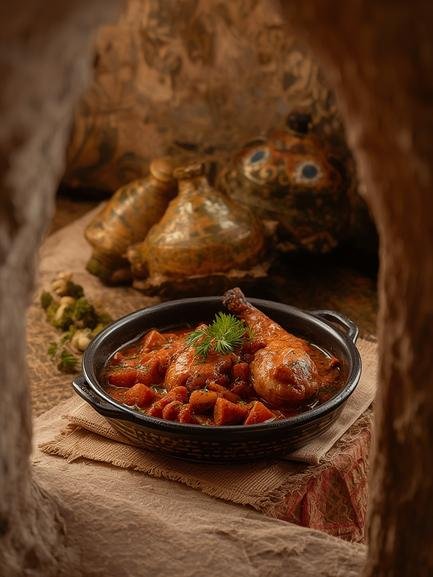

Morocco’s culinary landscape is adorned with countless treasures, but few dishes capture the essence of its gastronomic heritage quite like the Tajine de poulet. This slow-cooked chicken stew, prepared in a distinctive cone-shaped earthenware pot, represents more than just a meal—it’s a cultural institution that tells the story of Morocco’s rich history and diverse influences. For travelers seeking authentic experiences, sampling a properly prepared Moroccan cuisine is as essential as visiting the country’s architectural wonders. The dish’s aromatic blend of spices, tender meat, and sweet-savory balance makes it a culinary landmark worth exploring during any Moroccan journey.
History & Cultural Background

The history of this iconic dish stretches back centuries, with its origins firmly rooted in the Berber communities of North Africa. The name derives from the special clay cooking vessel (tajine) with its distinctive conical lid, which ingeniously creates a self-basting cooking environment. This cooking method was perfected for regions with limited water and fuel resources, allowing for slow cooking over low heat.
During the Arab influence in the 7th century, new spices and cooking techniques were introduced, evolving the dish further. By the time of the Moorish dynasties of the 12th-15th centuries, the tajine had become an established fixture in royal courts and ordinary homes alike.
The cultural significance of tajine extends beyond mere sustenance—it represents Moroccan hospitality at its finest. Traditionally served from the cooking vessel directly to the dining table, it encourages communal eating, with family and guests gathered around the central dish. This communal aspect reflects the importance of togetherness and generosity in Moroccan culture, where food is a vehicle for social bonding and celebration.
Architectural Highlights & Key Features
While not an architectural landmark in the traditional sense, the tajine vessel itself is a marvel of design functionality. Its conical lid serves a brilliant purpose: as steam rises during cooking, it condenses on the sloped interior and falls back into the dish, keeping the meat tender while concentrating flavors.
The chicken tajine showcases several distinguishing features that separate it from other Moroccan dishes:
- Base ingredients: Typically features bone-in chicken pieces as the protein foundation
- Preserved lemon: Adds a distinctive tangy brightness that balances the rich spices
- Olives: Usually green olives that provide briny contrast
- Spice profile: Often includes saffron, ginger, turmeric, cinnamon, and cumin
- Texture contrast: Combines tender meat with crunchy elements like toasted almonds
- Visual aesthetics: Presented with a colorful array of vegetables and garnishes arranged in a visually pleasing pattern
Regional variations exist throughout Morocco, with coastal areas incorporating more seafood elements, while inland versions might include dried fruits like apricots or prunes for sweetness.
Best Time to Visit & Practical Information
For culinary travelers, tajine can be enjoyed year-round in Morocco, though the dish’s warming properties make it especially comforting during the cooler winter months (November-February).
Most traditional restaurants serve tajine throughout the day, but for the most authentic experience, lunch (12:00-2:30 PM) is often the main meal when families gather for this dish. Expect to pay between 60-120 Moroccan dirhams ($6-12 USD) at mid-range establishments, with prices varying based on location and restaurant caliber.
For dress code, while Morocco is a Muslim country, tourist areas and restaurants are generally relaxed. However, modest dress (covering shoulders and knees) is always appreciated and shows respect for local customs.
The best tajines are often found at smaller, family-run establishments away from major tourist centers. Allow at least 45 minutes for your meal, as authentic tajines are cooked to order and never rushed.
Step-by-Step Exploration Guide
To truly appreciate Tajine de poulet, follow this culinary exploration route through the flavors and experiences of this iconic dish:
1. Start with a cooking class: Begin your tajine journey with a hands-on cooking class in cities like Marrakech, Fez, or Essaouira. Most classes include a market visit to source ingredients, offering insight into the fresh produce and spice selection essential to Moroccan cuisine.
2. Visit a traditional pottery workshop: Witness the crafting of authentic tajine vessels in pottery centers like Safi or Sale. Understanding the vessel’s design enhances appreciation for the cooking method.
3. Experience a home-cooked meal: Arrange a dining experience with a local family through platforms like EatWith or Traveling Spoon for the most authentic tajine.
4. Sample regional variations: Try different regional interpretations:
* Fez: Tajines with a sweeter profile featuring honey and dried fruits
* Marrakech: Bolder spice profiles with more heat
* Essaouira: Coastal versions incorporating local seafood alongside chicken
* Atlas Mountains: Rustic tajines with local vegetables and wild herbs
5. Document the presentation: Note how chefs arrange the dish—protein typically centered with vegetables artfully arranged around it. The moment when the conical lid is lifted, releasing a cloud of fragrant steam, is a photo opportunity not to be missed.
Nearby Attractions, Food & Accommodation
When exploring Morocco’s tajine culture, these complementary experiences enhance your culinary journey:
In Marrakech:
- Visit the spice markets of Medina before or after your tajine experience
- Try accompanying dishes at Café Clock or Le Jardin
- Stay at traditional riads like Riad Kniza or Riad El Fenn for culinary programs
In Fez:
- Explore the tanneries before dining at nearby Restaurant Asmae for excellent tajines
- Visit Café Clock Fez for cooking classes
- Stay at Dar Roumana, which offers exceptional Moroccan cuisine
In Essaouira:
- Browse the fish market in the morning
- Dine at Umia for contemporary takes on tajine
- Stay at L’Heure Bleue Palais for luxury or Dar Adul for boutique charm
Budget options:
- Many hostels offer tajine cooking nights
- Street food alternatives like grilled meats provide flavors similar to tajine at lower prices
Travel Tips & Common Mistakes to Avoid
Common Mistakes:
- Rushing the experience: Authentic tajine requires slow cooking (minimum 45 minutes). Be suspicious of restaurants serving it within minutes—it’s likely pre-made.
- Eating only at tourist restaurants: These often serve inferior versions with less complex flavors.
- Missing regional variations: Don’t assume all tajines are the same across Morocco.
- Using cutlery incorrectly: Traditional tajine is eaten using bread as a scoop and the right hand only.
- Overlooking accompanying sides: Moroccan bread, salads, and mint tea complete the experience.
Practical Tips:
- Learn basic Arabic phrases for ordering and showing appreciation for the food
- Tajines are typically communal dishes—be prepared to share from a central plate
- The edges of the tajine dish contain the most concentrated flavors
- Vegetarian versions (tajine khodra) are widely available for non-meat eaters
- Arrive hungry—portions are generous and meals unhurried
Conclusion
The journey through Morocco’s culinary heritage via Tajine de poulet offers travelers a sensory experience that transcends ordinary tourist activities. This iconic dish serves as a gateway to understanding Moroccan culture, where food preparation is an art form and dining a social celebration. The complex interplay of spices, the tender chicken, and the symphony of accompanying ingredients create more than a meal—they provide a cultural education on a plate. As you plan your Moroccan adventure, make space in your itinerary to properly experience the authentic Moroccan cuisine through its most beloved dish. Whether learned in a cooking class, enjoyed in a family home, or savored in a traditional restaurant, the tajine experience will likely become one of your most treasured memories of Morocco. Take time to appreciate this slow-cooked treasure, and let it reveal the heart and soul of Moroccan hospitality.
FAQs
How long does an authentic Tajine de poulet take to prepare?
An authentic chicken tajine requires approximately 1.5-2 hours for preparation and cooking. The slow cooking process is essential for developing the complex flavors and achieving the tender texture that defines a proper tajine.
Is it safe to eat tajine from street vendors in Morocco?
While Morocco’s street food is generally safe, tajine is rarely served by street vendors because of its lengthy cooking time. For tajine, opt for established restaurants or home dining experiences where proper cooking facilities ensure food safety.
Can I recreate authentic Tajine de poulet at home without the traditional clay pot?
Yes, though the clay pot contributes to the dish’s distinctive flavor, you can use a heavy-bottomed Dutch oven or slow cooker. The key elements are slow cooking, proper spicing, and maintaining moisture throughout the cooking process.
What dietary accommodations are available for tajine in Morocco?
Most Moroccan restaurants offer vegetable tajines for vegetarians. For those with gluten sensitivities, the tajine itself is typically gluten-free, but request meals without bread. Halal preparation is standard throughout Morocco, and many establishments can accommodate other dietary needs with advance notice.
What’s the proper etiquette for eating tajine in Morocco?
Eat using your right hand only, typically using bread to scoop up the food. Wait for the host or eldest person to begin eating first. Complimenting the food is appreciated, and it’s customary to leave a small portion on your plate to indicate you’ve eaten to satisfaction.