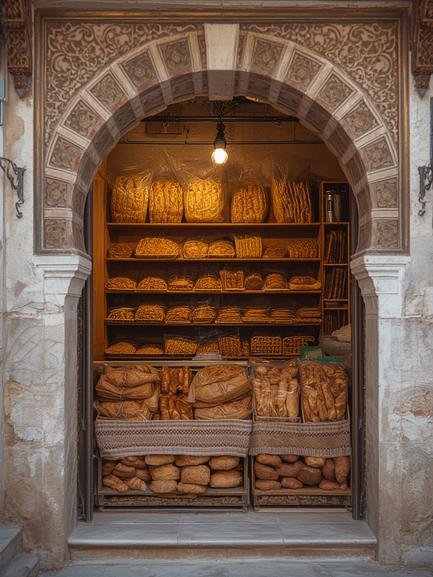

The rhythmic slapping of dough and enticing aroma of baking bread will guide you to a Moroccan bread bakery long before you see it. These community institutions represent more than just places to purchase daily bread—they’re living museums where centuries-old baking traditions continue to thrive. Visiting a traditional Moroccan khobz producer offers travelers an authentic glimpse into daily Moroccan life, where bread isn’t merely food but a cultural cornerstone.
For anyone seeking to understand Morocco beyond tourist attractions, these bakeries provide an intimate window into local customs and community connections.
History & Cultural Background
Bread in Morocco, known locally as “khobz,” has been the foundation of meals for countless generations. Traditional bakeries emerged centuries ago as communal facilities where neighborhood residents would bring their home-prepared dough for baking in large wood-fired ovens. These community ovens, called “farran,” date back to medieval times and evolved from necessity—few homes had adequate baking facilities, making shared ovens practical solutions.
The cultural significance of bakeries extends beyond practicality—they became social hubs where community news spread, relationships formed, and cultural identity strengthened. In ancient medinas, bakeries often operated near hammams (public baths) to efficiently use the same heat source. Today’s bakeries maintain many traditional methods while adapting to modern demands, creating a fascinating blend of old and new techniques.
Architectural Highlights & Key Features
Moroccan bakeries are architectural marvels designed for functionality and tradition. At their heart lies the domed clay or brick oven, often adorned with intricate tilework on its exterior. These wood-fired ovens can reach extremely high temperatures and feature a circular interior design that promotes even heat distribution.
The space typically includes:
– A front counter area where customers place orders
– A workshop space where bakers prepare and shape dough
– The oven room, often partially visible to customers
– A cooling area where freshly baked loaves rest
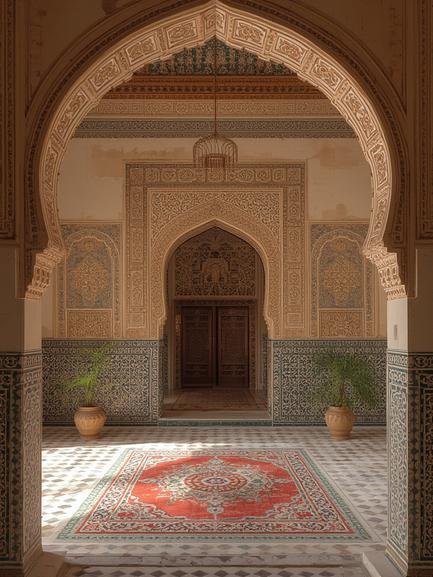
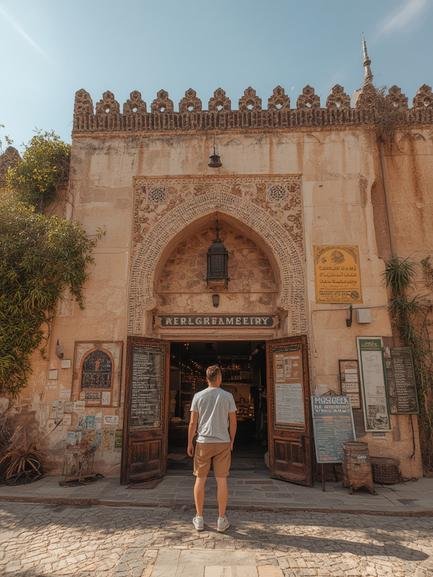
Traditional bakeries feature arched doorways, whitewashed walls, and sometimes decorative elements like carved wooden doors or ceramic tilework. The most authentic establishments maintain original features like stone flooring worn smooth by generations of bakers and customers. Modern bakeries might incorporate glass display cases while still preserving traditional architectural elements.
Best Time to Visit & Practical Information
For the most authentic experience, visit a Moroccan bakery between 6:00-8:00 AM when bread for breakfast is being prepared or between 11:00 AM-1:00 PM when lunch loaves emerge. During Ramadan, evening hours become especially busy as families prepare for breaking their fast.
Most neighborhood bakeries operate daily from early morning until evening, though some close for a few hours in the afternoon. There’s typically no entrance fee—these are functioning businesses where you’re welcome to observe and purchase bread. Dress modestly out of respect for local customs, and be prepared to communicate with basic French or Arabic phrases, as English may not be widely spoken in neighborhood bakeries.
While bakeries exist throughout Morocco, some of the most traditional can be found in the medinas of Fez, Marrakech, and Essaouira. Most are accessible on foot within these pedestrian-friendly old cities.
Step-by-Step Exploration Guide
To fully appreciate a Moroccan bread bakery, follow this exploration route:
1. Observe the neighborhood activity: Notice locals arriving with prepared dough or departing with fresh bread, especially in the morning hours.
2. Enter respectfully: Greet staff with “Salam alaikum” (peace be upon you) and ask permission before taking photos.
3. Watch the dough preparation: Position yourself where you can see bakers kneading and shaping the traditional Moroccan khobz into flat, round loaves.
4. Witness the oven loading: The most fascinating part is watching bakers skillfully use long wooden paddles (similar to pizza peels) to place dough inside the hot oven.
5. Observe the rotation system: Notice how bakers track whose bread is whose, often using small identifying marks.
6. Purchase fresh bread: Buy a warm loaf to taste the authentic flavor—best enjoyed with local olive oil or honey.
7. Engage with bakers: If language permits, ask about their techniques or how long they’ve practiced their craft.
The optimal viewing spots are near the counter where you can see both the preparation area and the oven without disturbing the workflow.
Nearby Attractions, Food & Accommodation
After your bakery visit, explore these complementary experiences:
Nearby Attractions:
– Spice markets for ingredients that accompany bread
– Local honey and olive oil shops
– Traditional hammams (often historically connected to bakeries)
– Craft workshops where bread baskets are made
Food Options:
– Budget: Street food vendors selling bread with various fillings
– Mid-range: Family restaurants serving tagines accompanied by fresh bread
– Upscale: Fusion restaurants incorporating traditional bread into modern cuisine
Accommodation:
– For an immersive experience, choose riads in traditional neighborhoods where you’ll hear the morning calls to the bakery
– Boutique hotels in medinas often have relationships with local bakeries
– Some culinary-focused accommodations offer bread-making workshops
Travel Tips & Common Mistakes to Avoid
Common Mistakes:
– Visiting during prayer times when bakeries may briefly close
– Taking photographs without permission
– Expecting to use credit cards in small neighborhood bakeries
– Missing the opportunity to try special bread varieties like msemen (square folded pancake-like bread) or harcha (semolina bread)
Practical Tips:
– Carry small bills for purchases
– Learn basic Arabic phrases to enhance your interaction
– Bring a cloth bag to carry your bread purchases
– Consider visiting multiple bakeries to compare regional styles
– Ask locals which bakery is considered the best in the neighborhood
Conclusion
The humble Moroccan bread bakery offers travelers something increasingly rare in our globalized world: an authentic cultural experience that remains virtually unchanged for centuries. More than just a place to purchase sustenance, these bakeries represent the heart of Moroccan community life, where tradition is preserved through daily ritual. By spending time observing and participating in this fundamental aspect of Moroccan life, you’ll gain insights into family structures, community bonds, and culinary heritage that no museum or guided tour could provide. When planning your Morocco itinerary, make space for the simple yet profound experience of visiting a traditional Moroccan khobz producer—it may become one of your most treasured memories of authentic Morocco.
FAQs
How long should I spend visiting a Moroccan bakery?
A 30-60 minute visit allows enough time to observe the entire baking process without intruding on the business operations.
Is it acceptable to take photographs inside bakeries?
Always ask permission first. Many bakers are proud of their craft and will allow photos, but requesting permission shows respect.
Are neighborhood bakeries safe for solo female travelers?
Yes, bakeries are generally very safe as they’re community institutions visited by locals of all ages and genders. Morning hours tend to be busiest with families.
Can I participate in the bread-making process as a visitor?
While most working bakeries don’t offer hands-on experiences, several cooking schools in major cities offer bread-making workshops where you can learn the techniques.
Should I tip the bakers when visiting?
Tipping isn’t expected when simply observing or purchasing bread, but if you take photos or receive special attention, a small tip (5-10 dirham) is appreciated.