

Planning a trip to Morocco’s elegant capital? Our Rabat safety guide will help you navigate this fascinating city with confidence and peace of mind. While Rabat is generally considered one of the safest cities in North Africa, understanding local customs and being aware of potential concerns will enhance your travel experience.
Whether you’re exploring the historic Kasbah of the Udayas or strolling along the Atlantic coastline, this Morocco travel safety resource provides essential information to ensure your visit is memorable for all the right reasons. As the administrative capital of Morocco, Rabat offers a more relaxed atmosphere than other Moroccan cities, making it an ideal destination for travelers seeking authentic experiences without overwhelming crowds.
History & Cultural Background
Rabat’s history spans over eight centuries, evolving from a fortress (ribat) to the imperial city we see today. Founded in the 12th century by the Almohad ruler Abd al-Mu’min as a military fortress, Rabat gained prominence when Yaqub al-Mansur made it his capital. The city’s strategic location along the Atlantic Ocean made it valuable for trade and defense.
Throughout its history, Rabat has been influenced by various civilizations, including Berber, Arab, Andalusian, and French. The French protectorate period (1912-1956) significantly shaped the city’s urban layout, with the creation of the Ville Nouvelle district featuring wide boulevards and European architecture alongside the traditional medina. After independence, King Mohammed V established Rabat as the capital of modern Morocco, blending traditional values with progressive governance, which contributes to its current reputation for stability and security.
Architectural Highlights & Key Features
Rabat boasts remarkable architectural diversity that reflects its rich multicultural heritage. The UNESCO-listed Kasbah of the Udayas stands as a picturesque fortress with narrow blue and white streets reminiscent of Greek islands, offering spectacular views over the Bou Regreg River.
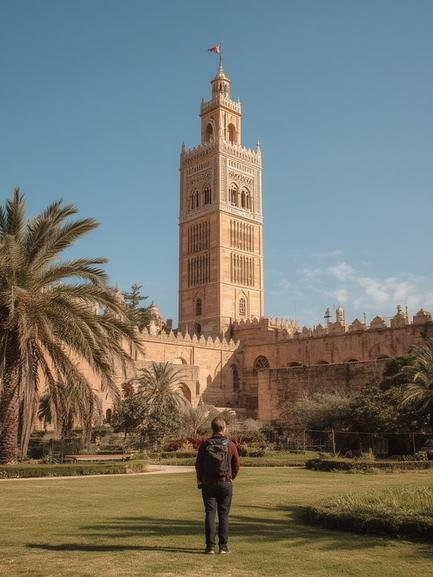
The unfinished Hassan Tower, begun in 1195, represents Almohad architectural ambition with its intricate geometric patterns. Nearby stands the mausoleum of Mohammed V, a masterpiece of Moroccan craftsmanship featuring zellige tilework, carved cedar wood, and white marble.
The Royal Palace, though not open to the public, displays impressive Andalusian-style architecture with its ornate gates guarded by royal guards in traditional uniforms. The medina offers a glimpse into traditional Moroccan urban planning with its maze-like streets, while the colonial-era Ville Nouvelle showcases Art Deco influences. This architectural diversity creates distinct neighborhoods with varying atmospheres, each with its own safety considerations for visitors.
Best Time to Visit & Practical Information
The ideal time to visit Rabat is during spring (April-May) and fall (September-October), when temperatures are pleasant, ranging between 65-75°F (18-24°C). Summer months (June-August) can be hot and crowded with domestic tourists, while winter (November-March) brings occasional rainfall but mild temperatures around 60°F (15°C).
Most attractions operate from 9:00 AM to 5:00 PM, with some closing for a few hours at midday. The Hassan Tower and Mohammed V Mausoleum are open daily from 9:00 AM to 6:00 PM, while the Kasbah of the Udayas welcomes visitors from 8:30 AM until sunset. Many sites have nominal entrance fees between 10 and 30 dirhams ($1-3 USD).
For transportation, Rabat’s modern tram system is safe, affordable, and connects major attractions. Blue petit taxis are metered and recommended for short distances. When visiting religious sites, dress modestly with shoulders and knees covered. The local emergency number is 190 for police, and most tourist areas have visible security personnel.
Step-by-Step Exploration Guide
Begin your day in Rabat with an early morning visit to the Kasbah of the Udayas, when it’s quietest and most photogenic. Enter through the magnificent Almohad gate and explore the narrow blue and white streets. Our Rabat safety guide recommends visiting this area in the morning when it’s less crowded and easier to maintain awareness of your surroundings. The Andalusian Gardens within the Kasbah offer a peaceful retreat, followed by a visit to Café Maure for traditional mint tea with views over the river.
From there, take a short taxi ride or a 15-minute walk to the Hassan Tower and Mohammed V Mausoleum complex. This well-patrolled area is part of the Morocco travel safety network of monuments with dedicated security staff. Spend approximately one hour exploring this historic site.
In the afternoon, head to the Medina for shopping and cultural immersion. Stay on main thoroughfares and keep valuables secure. Later, visit the Chellah necropolis, an ancient Roman and medieval Islamic site where you can observe storks nesting on ancient ruins. End your day with a sunset stroll along Rabat’s Corniche waterfront promenade, a popular and well-lit area where locals gather in the evening.
Nearby Attractions, Food & Accommodation
Beyond central Rabat, consider a day trip to the neighboring city of Salé across the Bou Regreg River, accessible via water taxi or tram. The Salé Medina offers a more authentic, less touristy experience. The beach town of Temara, just 10 km south, provides coastal relaxation with monitored beaches.
For dining, Dinarjat in the medina serves traditional Moroccan cuisine in a restored riad, while Le Dhow, a restaurant on a boat docked in the Bou Regreg River, offers international fusion dishes with river views. Budget travelers should try Yamal Al-Sham for affordable Middle Eastern fare, and don’t miss the street food stalls on Avenue Mohammed V for authentic Moroccan snacks.
Accommodation options include luxury stays at Sofitel Rabat Jardin des Roses or Hotel La Tour Hassan Palace. Mid-range options include Riad Dar El Kebira in the medina or Hotel Bélère in the Ville Nouvelle. Budget travelers can consider Medina Hostel or Hotel de France, both offering clean rooms in central locations with good security measures.
Travel Tips & Common Mistakes to Avoid
Safety Tips:
• Carry a photocopy of your passport rather than the original
• Use hotel safes for valuable documents and excess cash
• Avoid displaying expensive jewelry or electronics
• Stay in well-lit areas after dark and use official taxis
• Be particularly vigilant at the train station and crowded markets
• Women travelers should consider modest dress to avoid unwanted attention
Common Mistakes:
• Not negotiating taxi fares before starting your journey
• Taking photographs of government buildings or security personnel
• Exchanging currency outside of official banks or exchange offices
• Carrying large sums of money or all your credit cards at once
• Assuming all areas have the same safety profile at all times of day
• Not checking if your travel insurance covers Morocco
Keep a local SIM card or know how to contact emergency services (190 for police). The tourist police can be reached at +212-537-703-278 and maintain offices near major attractions. Many visitors overlook the fact that most Moroccans speak Arabic and French, with limited English, so learning a few basic Arabic or French phrases can be extremely helpful.
Conclusion
Rabat presents the perfect balance of authentic Moroccan culture, historic significance, and modern amenities, all within a relatively safe environment for tourists. This comprehensive Rabat safety guide has provided you with the knowledge to navigate the city confidently, from understanding its diverse neighborhoods to knowing how to handle various situations. By following these recommendations and staying informed with Morocco travel safety updates, you’ll be able to immerse yourself in the rich tapestry of experiences Rabat offers while minimizing risks.
Remember that Rabat’s charm lies in its authenticity and the warmth of its people. Take time to engage respectfully with locals, sample traditional cuisine, and absorb the unique atmosphere that makes this capital city special. Whether you’re admiring Islamic architecture, discovering ancient ruins, or simply watching the sunset over the Atlantic Ocean, Rabat rewards the prepared traveler with unforgettable experiences. Plan your visit today and discover why this elegant capital deserves a prominent place on any Moroccan itinerary.
FAQs
Is Rabat safe for solo female travelers?
Rabat is generally considered one of the safer Moroccan cities for solo female travelers. Women should dress modestly, be aware of their surroundings, and exercise standard precautions. The administrative areas, Ville Nouvelle, and tourist sites are well-patrolled, though it’s advisable to avoid isolated areas after dark.
What should I do in case of emergency in Rabat?
For emergencies, dial 190 for police, 150 for ambulance, or 177 for fire services. Most hotels have security staff who can assist. The tourist police office near Hassan Tower specializes in helping visitors and can provide assistance in several languages.
Are there any areas in Rabat I should avoid?
While Rabat is relatively safe, some outlying neighborhoods like Yacoub El Mansour and parts of Youssoufia are best avoided at night. Stick to well-lit, populated areas in the evening, especially in the older parts of the medina, where narrow streets can be disorienting.
How long should I plan to stay in Rabat?
Two to three days is ideal for exploring Rabat’s main attractions at a comfortable pace. If you include day trips to nearby Salé, Témara, or the Roman ruins at Volubilis, consider extending your stay to 4-5 days.
Can I take photographs freely in Rabat?
Photography is generally permitted at tourist sites, though some religious buildings may have restrictions. Always ask permission before photographing individuals, especially women and children. Avoid photographing government buildings, palaces, and military/security personnel, as this could lead to questioning by authorities.