


Planning a trip to Morocco’s captivating capital requires understanding the essential Rabat visa information before your journey. As the administrative center of Morocco, Rabat combines rich history with modern governance, making it a fascinating destination for travelers seeking authentic Moroccan experiences. Whether you’re planning to explore the ancient Kasbah of the Udayas, stroll through the elegant Andalusian Gardens, or marvel at the Hassan Tower, knowing the Morocco entry requirements is crucial for a hassle-free vacation. This guide provides everything you need to know about visiting this royal city, from visa applications to important documentation.
History & Cultural Background

Rabat’s history spans over eight centuries, beginning with its establishment as a fortress during the Almohad Caliphate in the 12th century. The city’s name derives from “Ribat,” meaning fortress, highlighting its original military purpose. Throughout the centuries, Rabat evolved from a pirate haven to an imperial city during the 17th century under the Alaouite dynasty. In 1912, when Morocco became a French protectorate, Rabat was designated as the capital, a status it maintained after independence in 1956.
Today, Rabat stands as a UNESCO World Heritage site, recognized for its harmonious blend of historic monuments, modern architecture, and urban planning that respects both Islamic and French colonial influences. The city showcases Morocco’s cultural resilience and adaptability through periods of Berber, Arab, Andalusian, and European influence, creating a unique melting pot of traditions, cuisine, and architectural styles.
Architectural Highlights & Key Features
Rabat’s architectural landscape presents a fascinating journey through centuries of Moroccan history. The iconic Hassan Tower, an incomplete 12th-century minaret, stands as a testament to the ambitious vision of Sultan Yacoub al-Mansour. Nearby, the modern Mausoleum of Mohammed V showcases exquisite Moroccan craftsmanship with its white marble, zellige tilework, and carved cedar ceiling.
The UNESCO-protected Kasbah of the Udayas features stunning Andalusian-influenced design with its imposing gate (Bab Oudaia), narrow whitewashed streets, and traditional blue-painted doors. The Royal Palace (Dar al-Makhzen), although not open to the public, impresses visitors with its magnificent exterior featuring ornate gates, detailed craftsmanship, and ceremonial guards.
More recent architectural gems include the contemporary Rabat-Salé Urban Infrastructure Project with its sleek Mohammed VI Bridge and the Grand Theatre of Rabat designed by the late Zaha Hadid, representing Morocco’s commitment to blending tradition with modernity.
Best Time to Visit & Practical Information
The ideal time to visit Rabat is during spring (April-May) and fall (September-October) when temperatures are pleasantly moderate, ranging from 68°F to 77°F (20-25°C). Summer (June-August) brings hotter weather with temperatures sometimes exceeding 86°F (30°C), while winter (November-March) can be mild but occasionally rainy.
Most historical sites are open daily from 9:00 AM to 6:00 PM, though hours may change during Ramadan. The Hassan Tower complex and Kasbah of the Udayas are free to enter, while the Chellah necropolis costs approximately 70 MAD (about $7 USD). The Mohammed V Mausoleum has no entrance fee but observes prayer time closures.
Modest dress is recommended, particularly when visiting religious sites, with shoulders and knees covered. Rabat is well-connected by train to major Moroccan cities, and within the city, the modern tram system offers convenient transportation between major attractions for just 6 MAD (approximately $0.60 USD) per trip.
Step-by-Step Exploration Guide
Begin your exploration of Rabat with proper preparation regarding Rabat visa information. Once your documentation is in order, follow this optimized itinerary for experiencing the city:
1. Morning: Historical Core – Start at the Hassan Tower and Mohammed V Mausoleum complex. Arrive early (around 9:00 AM) to avoid crowds and capture beautiful morning light for photographs. Allow 1-2 hours to fully appreciate the historical significance and architectural details.
2. Late Morning: Kasbah of the Udayas – Head to this fortified citadel with its stunning Andalusian Garden. Don’t miss the panoramic view of the Bou Regreg River from the platform near Café Maure, where you can enjoy traditional mint tea and Moroccan pastries. The narrow blue-and-white streets offer excellent photo opportunities.
3. Afternoon: Medina and Souks – Explore Rabat’s less touristy medina. Enter through Bab El Had gate and wander the authentic market streets. Visit the Mellah (former Jewish quarter) and shop for local crafts like carpets and leather goods at fixed prices (unlike other Moroccan cities).
4. Late Afternoon: Chellah Necropolis – This tranquil archaeological site combines Roman ruins and medieval Islamic remains. The gardens are particularly beautiful in late afternoon light and are home to numerous storks nesting on the ancient walls. Look for the hidden underground chamber near the main sanctuary.
5. Evening: Ville Nouvelle – Finish your day in the modern city center around Avenue Mohammed V. Enjoy dinner at one of the restaurants near Parliament Square, where you can observe local life while sampling Moroccan cuisine with a cosmopolitan twist.
Remember to check the Morocco entry requirements before your trip to ensure a smooth experience exploring these magnificent sites.
Nearby Attractions, Food & Accommodation
Nearby Attractions:
- Salé – Rabat’s twin city across the river offers the impressive Great Mosque and Medersa
- Temara Beach – Just 15 minutes south, perfect for a refreshing ocean break
- Forest of Mamora – The largest cork oak forest in North Africa, ideal for nature lovers
Food Recommendations:
- Budget: Ty Potes (French-Moroccan fusion), Yamal Acham (Syrian cuisine)
- Mid-range: Le Petit Beur (traditional Moroccan), La Bodéga (Spanish-Moroccan tapas)
- High-end: Le Dhow (restaurant on a boat), La Maison du Gourmet (French-Moroccan fine dining)
Don’t miss sampling local specialties like harira soup, pastilla (savory pastry), and the Rabat version of couscous with seven vegetables.
Accommodation Options:
- Budget: Riad Meftaha, Dar Yanis (authentic riads under $50/night)
- Mid-range: Riad Kalaa, Hotel des Oudaias ($80-150/night)
- Luxury: Sofitel Jardin des Roses, Villa Mandarine ($200+/night)
Most accommodations are concentrated either in the medina (traditional) or Agdal neighborhood (modern), each offering distinctly different experiences of the city.
Travel Tips & Common Mistakes to Avoid
Essential Tips:
- Purchase a local SIM card at the airport for affordable data (approximately 100 MAD for 10GB)
- Use the Tramway for efficient transportation between major sites (6 MAD per ride)
- Carry small denominations of Moroccan dirhams for small purchases and tips
- Download maps offline as some medina streets aren’t well-marked on GPS
- Learn basic Arabic or French phrases for more meaningful interactions with locals
Common Mistakes to Avoid:
- Assuming Rabat is only a political center with little to offer tourists
- Visiting the Royal Palace expecting to enter (it’s closed to the public)
- Spending too little time in Rabat (allocate at least 2 full days)
- Taking photos of government buildings or military personnel without permission
- Neglecting to verify visa requirements based on your nationality well in advance
Conclusion
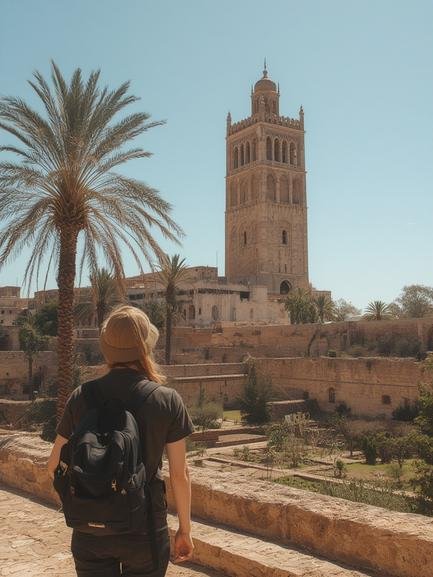
Understanding Rabat visa information is your first step toward experiencing the unique charm of Morocco’s capital city. With its perfect blend of historical richness and contemporary vibrancy, Rabat offers travelers an authentic Moroccan experience without the overwhelming crowds found in other cities. From the majestic Hassan Tower to the serene Andalusian Gardens, every corner of this royal city tells a story of Morocco’s fascinating cultural evolution. Before finalizing your travel plans, be sure to review the latest Morocco entry requirements to ensure a smooth arrival. Prepare your documents, pack your sense of adventure, and get ready to discover why Rabat deserves its place among Morocco’s most rewarding destinations.
FAQs
Is Rabat safe for foreign tourists?
Yes, Rabat is generally considered one of the safest cities in Morocco. As the administrative capital, it has a visible police presence and lower rates of tourist-targeted scams compared to larger tourist destinations. Standard precautions like watching personal belongings in crowded areas are still recommended.
How much time should I spend in Rabat?
While you can see the major highlights in one full day, 2-3 days is ideal to properly experience the city’s attractions at a relaxed pace and include potential day trips to nearby Salé or the beaches.
Do I need a visa to visit Rabat as a tourist?
Visa requirements depend on your nationality. Citizens of many Western countries including the US, UK, EU, Canada, and Australia can enter Morocco visa-free for up to 90 days. Other nationalities should check current requirements with a Moroccan consulate or embassy before traveling.
Can I take photographs freely in Rabat?
Photography is generally allowed at tourist sites, but avoid photographing military installations, government buildings, and airport facilities. Always ask permission before photographing local people, particularly in more traditional areas.
Is Rabat accessible for travelers with mobility challenges?
The modern parts of Rabat are relatively accessible with good sidewalks and the modern tram system. However, historic sites like the Kasbah and Medina have uneven surfaces, steps, and narrow passages that can be challenging. The Hassan Tower complex is partially wheelchair accessible with ramps to the main viewing areas.