

Traveling to Morocco’s elegant capital requires proper preparation, especially when it comes to staying connected. Rabat mobile and internet services have significantly improved in recent years, making it easier for tourists to navigate the city, communicate with loved ones, and share their experiences online.
Whether you’re planning to explore the ancient Kasbah of the Udayas or conduct business meetings in the modern Hay Riad district, having reliable mobile data plans will enhance your visit. Understanding the local telecommunications landscape ahead of time saves both money and potential frustration during your Moroccan adventure.
History & Cultural Background

Morocco’s telecommunications sector has undergone remarkable development since the early 2000s. In Rabat, as the administrative capital, digital infrastructure was prioritized early on. The government’s digital transformation initiative, launched in 2009, aimed to modernize the country’s telecommunications and bring internet access to more citizens. By 2010, 3G services were widely available in Rabat, with 4G following in 2015. Today, the city boasts impressive coverage with three major providers: Maroc Telecom (the oldest, established in 1998), Orange Morocco (formerly Méditel), and Inwi (previously Wana).
The cultural significance of mobile communication in Rabat reflects wider Moroccan society, where mobile phones quickly became essential for maintaining family connections and conducting business. Internet cafés, once ubiquitous around the medina and ville nouvelle, have largely given way to widespread smartphone usage and home internet connections, though some still exist to serve tourists and those without personal devices.
Architectural Highlights & Key Features
The telecommunications landscape in Rabat features an interesting mix of modern infrastructure and adaptation to the city’s historic architecture. The main telecommunications towers stand prominently in the Agdal district, while efforts have been made to discreetly integrate cellular equipment into the historic medina without disrupting its UNESCO World Heritage status.
Key features of Rabat’s telecommunications include:
– Extensive 4G coverage throughout the city, with growing 5G availability in business districts
– Free WiFi in major hotels, restaurants, and some public spaces like the Mohammed VI Museum of Modern Art
– Fiber optic internet available in newer residential neighborhoods and business districts
– Traditional phone cabins (“téléboutiques”) still operating in some residential areas
– Several telecommunications service centers in major shopping malls like Mega Mall and Morocco Mall
The most reliable signal strengths can typically be found in Agdal, Hay Riad, and the city center, while some parts of the medina may experience occasional connectivity challenges due to thick walls.
Best Time to Visit & Practical Information
For purchasing SIM cards or handling mobile connectivity matters, consider the following:
– Most telecommunications stores operate from 9:00 AM to 7:00 PM, Monday through Saturday
– Main provider stores close for about two hours during lunch (typically 12:30-2:30 PM)
– Avoid visiting during the first few days of the month when Moroccans pay bills (long queues)
– For tourist SIM cards, bring your passport as ID is required for registration
– Current prepaid packages range from 20-200 dirhams ($2-20 USD) depending on data needs
– Major provider stores are found in Agdal, city center, and shopping centers
– Many small shops and kiosks also sell recharge cards and basic SIM packages
While connectivity is generally good year-round, be aware that during major holidays like Eid, networks can become congested with call traffic.
Step-by-Step Exploration Guide
When navigating Rabat mobile and internet options, follow this route for the most efficient experience:
1. Airport/Train Station Arrival: Consider purchasing a tourist SIM card immediately upon arrival. The Maroc Telecom kiosk at Rabat-Salé Airport offers tourist-friendly packages, though prices are slightly higher than in the city.
2. Major Provider Stores: For more options, head to the main avenues in Agdal (Avenue de France) where all three mobile data plans providers have flagship stores with English-speaking staff.
3. Data Package Selection: The typical tourist needs 5-10GB for a week’s stay. Ask specifically for “pass internet” or tourist packages.
4. WiFi Mapping: While exploring, note these reliable WiFi spots:
– Café Maure in the Kasbah of Udayas (beautiful terrace with good connection)
– Paul Bakery near Parliament (excellent connection speed)
– McDonald’s and Starbucks branches (consistent connectivity)
– The National Library (requires simple registration)
– Mohammed V University campus areas
5. Coverage Testing: Test your mobile data in different areas. If staying in the medina, you might notice weaker signals indoors due to thick walls.
6. Recharge Options: Download your provider’s app for easy recharge or use any small “hanout” (corner shop) where recharge cards are sold.
Nearby Attractions, Food & Accommodation
While managing your connectivity needs, explore these nearby spots:
Near Maroc Telecom Agdal Branch:
– Le Petit Beur restaurant (traditional Moroccan cuisine)
– Mega Mall (shopping and dining options)
– Jardin d’Essais Botaniques (beautiful botanical gardens)
Near Orange Store in City Center:
– Rabat Archaeological Museum
– Café Renaissance (local favorite with good WiFi)
– Hotel Bélère (mid-range accommodation with excellent internet)
Near Inwi Shop in Hay Riad:
– The View Restaurant (upscale dining with panoramic views)
– Sofitel Rabat (luxury accommodation with premium WiFi)
– Tramway station for easy city navigation
Budget accommodations with reliable internet include Riad Meftaha in the medina and Hotel Rabat in the city center, both offering fiber-optic connections.
Travel Tips & Common Mistakes to Avoid
Common Mistakes:
– Relying solely on international roaming (extremely expensive)
– Buying SIM cards from unofficial street vendors (risk of premature deactivation)
– Not checking if your phone is unlocked before travel
– Forgetting to bring ID when purchasing a SIM card
– Underestimating data needs when using navigation apps
Smart Connectivity Tips:
– Download offline maps of Rabat before arrival
– Consider a portable WiFi device rental for families or groups
– Keep paper copies of important addresses and phone numbers as backup
– Learn basic Arabic or French phrases for buying recharge cards
– Keep your SIM card packaging and activation number
– Use WhatsApp for local calls to save credit
– Enable data-saving mode on social media apps
Conclusion
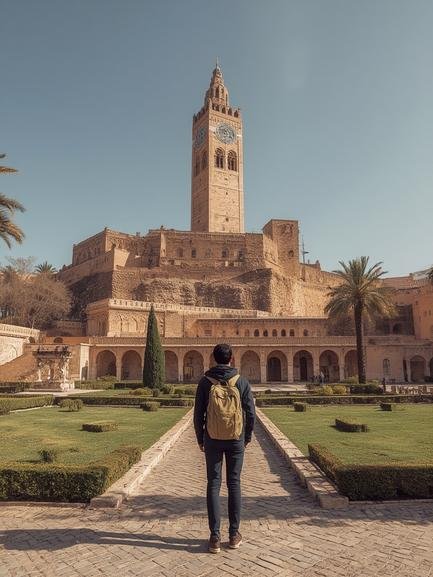
Mastering Rabat mobile and internet options enhances your Moroccan capital experience immeasurably. The city offers good connectivity compared to other Moroccan destinations, allowing visitors to stay in touch while exploring its rich cultural heritage. Whether you’re posting photos of the magnificent Hassan Tower, navigating to hidden gems in the medina, or translating menu items in local restaurants, reliable mobile data plans are an essential travel tool. Plan your connectivity strategy before arrival, invest in a local SIM card upon landing, and you’ll be free to immerse yourself in all the beauty, history, and culture Rabat has to offer. When will you connect with Rabat’s digital and physical landscapes?
FAQs
Is it safe to use public WiFi in Rabat?
While generally safe, avoid conducting banking or highly sensitive activities on public networks. Consider using a VPN for additional security when connecting to public WiFi spots in cafés and hotels.
How long does it take to purchase and activate a SIM card?
The process typically takes 15-30 minutes, including registration and activation. Main provider stores may take longer during busy periods, while smaller shops often process requests more quickly.
Can I take photos in telecommunications stores?
Photography is generally not permitted inside telecommunications stores for security reasons. However, you can freely photograph your purchased products once outside.
Do I need to speak French or Arabic to purchase mobile services?
While helpful, it’s not essential. Main provider stores in tourist areas typically have staff who speak basic English. Bringing written details of what you need can help overcome language barriers.
How reliable is internet coverage in the Rabat medina?
Coverage in the medina varies by location. Signal strength can weaken inside buildings with thick walls, but most riads and cafés offer WiFi to compensate. Open areas and main medina streets generally have good 4G coverage.