

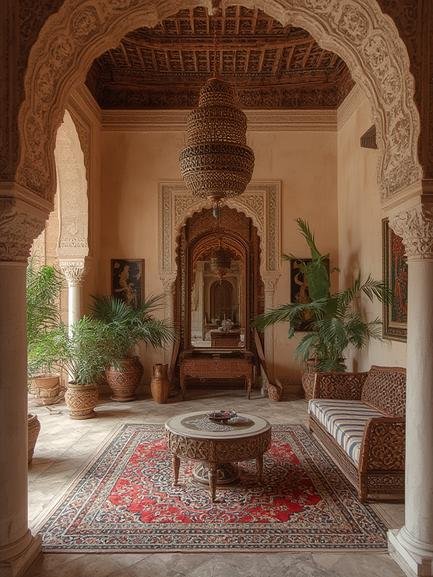

Morocco’s capital city holds centuries of fascinating history, imperial grandeur, and cultural richness waiting to be discovered. Rabat cultural tours provide travelers with an immersive experience into the heart of this UNESCO World Heritage city. Unlike many North African destinations, Rabat balances modern sophistication with traditional Moroccan charm, making it an ideal location for cultural exploration. Whether you’re drawn to ancient architecture, artistic traditions, or Moroccan historical sites, these guided experiences unveil the authentic spirit of the imperial city.
A thoughtfully organized tour transforms what could be an overwhelming experience into a meaningful journey through Morocco’s cultural tapestry.
History & Cultural Background
Rabat’s history stretches back to the 12th century when the Almohad ruler Abd al-Mu’min established a kasbah (fortress) to launch campaigns against Spain. The name “Rabat” comes from the Arabic “Ribat al-Fath,” meaning “Fortress of Victory.” While initially serving military purposes, Rabat gained prominence in the 17th century under the Alaouite dynasty.
The city reached its zenith during the French Protectorate era (1912-1956), when Resident-General Hubert Lyautey designated Rabat as Morocco’s administrative capital. This period brought significant urban development, blending European architecture with traditional Moroccan styles to create the distinctive aesthetic visible today.
After independence in 1956, King Mohammed V reinforced Rabat’s status as the national capital, establishing it as a center of political power and cultural preservation. Today, the city proudly displays its layered history through its monuments, museums, and living traditions that bridge Berber, Arab, Andalusian, and French influences.
Architectural Highlights & Key Features
Rabat’s architectural treasures reflect its diverse historical influences:
– Kasbah of the Udayas: This 12th-century fortified city perched above the Atlantic features distinctive blue and white painted streets, Andalusian gardens, and stunning ocean views.
– Hassan Tower and Mausoleum of Mohammed V: The unfinished 12th-century minaret stands alongside the modernist mausoleum housing the tombs of King Mohammed V and his sons, showcasing both ancient ambition and contemporary reverence.
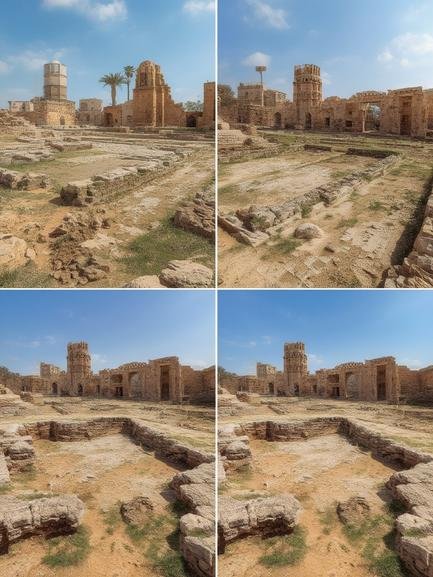
– Chellah Necropolis: This unique site layers Roman ruins beneath medieval Islamic architecture, surrounded by lush gardens frequented by storks.
– Royal Palace: Though its interior remains closed to the public, the palace’s magnificent exterior gates and guards in traditional attire offer a glimpse into royal Moroccan life.
– Medina: Smaller and less touristy than those in Fez or Marrakech, Rabat’s walled old city offers authentic craft workshops, traditional riads, and local markets without overwhelming crowds.
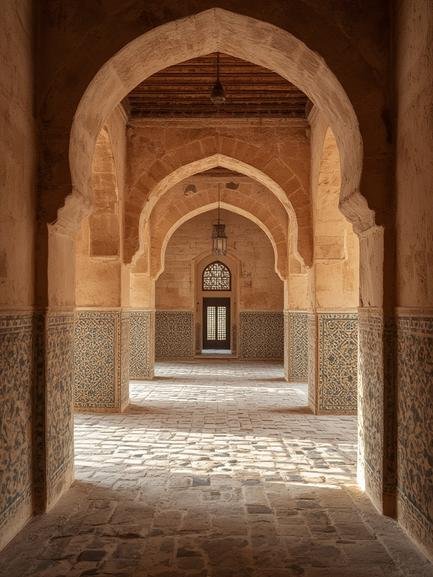
The city’s architectural style harmoniously blends Islamic geometric patterns, Andalusian decorative elements, and French colonial urban planning, creating a uniquely Rabati aesthetic.
Best Time to Visit & Practical Information
Rabat enjoys a mild Mediterranean climate, making it pleasant year-round. However, the ideal visiting times are:
– Spring (March-May): Comfortable temperatures (15-25°C/59-77°F) and blooming gardens.
– Fall (September-November): Warm days, cool evenings, and fewer tourists.
– Avoid August: This is when many locals vacation, leading to closed shops and higher humidity.
Opening Hours:
– Most historical sites: 9 AM-5 PM (winter) or 6 PM (summer)
– Museums: Closed on Tuesdays
– Mosques: Non-Muslims cannot enter except Hassan II Mosque
– Friday afternoons: Many sites close early for prayers
Pricing:
– Kasbah of the Udayas: 70 MAD (~$7 USD)
– Archaeological Museum: 40 MAD (~$4 USD)
– Combined tickets available for multiple sites
Getting Around:
– Tram system: Modern and affordable (6 MAD per journey)
– Petit taxis: Blue in Rabat, metered and inexpensive
– Walking: The central tourist areas are pedestrian-friendly
Step-by-Step Exploration Guide
A perfect day exploring Rabat’s cultural highlights follows this logical path:
1. Morning: Begin at the Kasbah of the Udayas (8:30-10:30 AM)
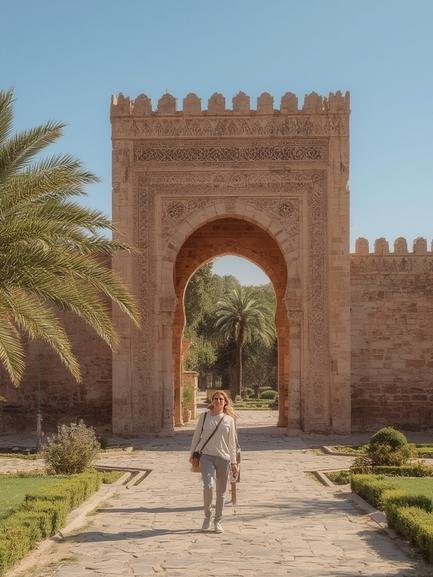
– Enter through the magnificent Almohad gate
– Wander the picturesque blue and white alleyways
– Visit the Andalusian Gardens
– Enjoy a traditional mint tea at Café Maure overlooking the Bou Regreg River
2. Late Morning: Explore the Hassan Tower Complex (11:00 AM-1:00 PM)
– Marvel at the unfinished 12th-century minaret
– Visit the Mausoleum of Mohammed V
– Watch the Royal Guard in traditional costume
– Photography tip: Capture the symmetrical columns with the tower in the background
3. Lunch in the Medina (1:00-2:30 PM)
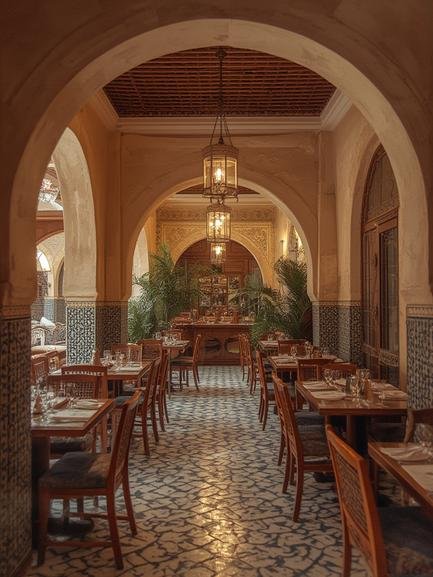
– Sample traditional Moroccan cuisine at a local restaurant
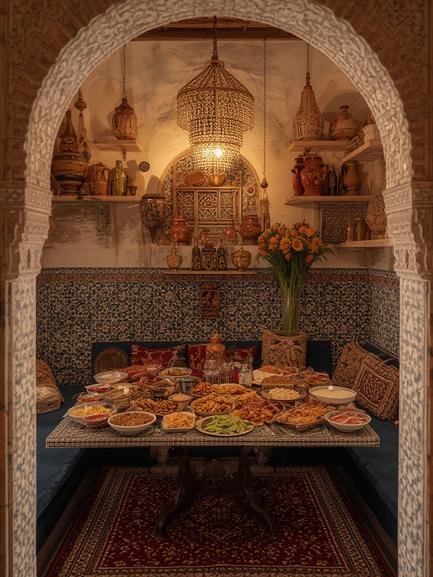
– Try regional specialties like “rfissa” or “pastilla”
4. Afternoon: Discover the Chellah Necropolis (3:00-5:00 PM)
– Explore the Roman ruins and Islamic architecture
– Spot the colony of storks nesting on ancient walls
– Visit during springtime to see wildflowers blooming among the ruins
5. Evening: Stroll along the Corniche (5:30 PM onwards)
– Watch the sunset over the Atlantic
– Experience how Rabat cultural tours showcase both historical and contemporary Moroccan historical sites
– End with dinner at one of the seafood restaurants
Nearby Attractions, Food & Accommodation
Nearby Attractions:
– Salé: Rabat’s sister city across the river, known for its Great Mosque and madrasa
– Temara Beach: Just 15 minutes south for Atlantic relaxation
– Roman ruins of Volubilis: A worthwhile day trip (about 2 hours by car)
Dining Options:
– Budget: Street food in the Medina, particularly around Rue Souika
– Mid-range: Dar Naji for traditional Moroccan cuisine
– Upscale: Le Dhow, a restaurant on a boat offering fusion cuisine and river views
Accommodation:
– Budget: Riad Meftaha or youth hostels near the Medina
– Mid-range: Riad Kalaa or Hotel Capitale
– Luxury: Sofitel Rabat Jardin des Roses or Villa Diyafa Boutique Hotel & Spa
Travel Tips & Common Mistakes to Avoid
Common Mistakes:
– Rushing through sites: Allow at least two full days to appreciate Rabat properly
– Ignoring small museums: The Villa des Arts and Money Museum offer unique perspectives
– Missing Salé: Many tourists never cross the river to explore Rabat’s sister city
– Expecting constant hustling: Unlike Marrakech or Fez, Rabat has a more relaxed atmosphere
Practical Tips:
– Dress respectfully: Rabat is Morocco’s administrative capital with a conservative streak
– Learn basic French phrases: While Arabic is the official language, French is widely spoken
– Use the tram: It’s clean, efficient, and connects most major tourist spots
– Visit the central market (Souk Es Sebat): Go in the morning for the freshest products
– Get a local SIM card: Affordable data makes navigation much easier
Conclusion
Rabat stands apart as Morocco’s most elegant and approachable imperial city. With its perfect balance of historical depth and contemporary comfort, it offers cultural travelers an ideal introduction to North African heritage. Rabat cultural tours provide structured yet flexible ways to engage with the city’s multi-layered identity, from ancient ruins to vibrant contemporary arts. Whether you’re drawn to Islamic architecture, archaeological discoveries, or Moroccan historical sites, Rabat rewards those who take time to explore its cultural treasures. Book your tour experience today and discover why Morocco’s capital deserves a prominent place on your North African itinerary – a city where royal heritage meets coastal charm in perfect harmony.
FAQs
How long should I spend exploring Rabat’s cultural sites?
A minimum of two full days is recommended to appreciate Rabat’s main cultural attractions without rushing. Add an extra day if you want to include nearby Salé or day trips to surrounding areas.
Is Rabat safe for tourists?
Yes, Rabat is considered one of the safest cities in Morocco. As the administrative capital, it has a significant security presence. Standard travel precautions apply, but tourists rarely encounter serious issues.
Are photography restrictions in place at cultural sites?
Photography is generally permitted at most outdoor monuments and in the medina. Inside museums, rules vary – some prohibit flash photography or charge a small fee for camera use. Always ask before photographing people, especially women.
What should women wear when visiting cultural sites in Rabat?
While Rabat is relatively progressive, respectful dress is appreciated. Women should cover shoulders and knees, especially when visiting religious sites. A light scarf is useful for impromptu mosque visits (though most remain closed to non-Muslims).
Is it necessary to hire a guide for cultural sites?
While not mandatory, a knowledgeable guide significantly enhances the experience by providing historical context and cultural insights. Many sites have minimal signage in English, making a guide valuable for deeper understanding.