
Navigating Morocco’s charming capital city becomes effortless when you understand how Rabat taxi services operate. As the administrative center of Morocco, Rabat combines historical significance with modern infrastructure, making it a fascinating destination for travelers.
Whether you’re heading to the ancient Kasbah of the Udayas, the Hassan Tower, or the bustling medina, Moroccan transportation options like taxis provide convenient and relatively affordable means to explore the city. Understanding how these services function will enhance your travel experience and help you navigate Rabat like a local.
History & Cultural Background

Taxis have been a fundamental part of Rabat’s transportation system since the mid-20th century. During the French protectorate era (1912-1956), formal taxi services began to emerge, initially serving the colonial population but gradually becoming accessible to all citizens. The iconic petit taxis (small taxis) were introduced in the 1970s as part of Morocco’s effort to modernize urban transportation systems.
The cultural significance of taxis in Rabat extends beyond mere transportation. They represent a microcosm of Moroccan society, where drivers often serve as unofficial ambassadors, sharing local insights, recommendations, and occasionally political commentary with passengers. The distinction between petit taxis (small, city-bound vehicles) and grand taxis (larger, intercity vehicles) remains a unique characteristic of Morocco’s transportation culture that has been preserved despite modernization efforts.
Architectural Highlights & Key Features
Rabat’s taxi landscape features two distinct categories, each with unique characteristics:
Petit Taxis:
– Compact Fiat Uno or similar small cars
– Distinctive blue color in Rabat (each Moroccan city has its own color)
– Equipped with meters (though not always used)
– Maximum capacity of three passengers
– Restricted to operating within city limits
Grand Taxis:
– Typically white Mercedes sedans from the 1970s-1990s
– Larger capacity, officially seating six passengers (four in the back, two in front)
– Fixed routes between cities or to specific destinations
– Operate on a shared basis, departing when full
– No meters; prices are negotiated or predetermined
Both taxi types feature simple, functional interiors that prioritize durability over luxury. Many grand taxis have been meticulously maintained for decades, becoming rolling pieces of Moroccan automotive heritage.
Best Time to Visit & Practical Information
Ideal Times for Taxi Use:
– Early morning (6-8 AM) for easiest availability
– Avoid rush hours (8-9 AM and 5-7 PM)
– Late evening after 10 PM may require calling a taxi service
– Sunday mornings tend to have less demand
Practical Information:
– Petit taxi fares start at approximately 7-8 dirhams (base fare) plus 2-3 dirhams per kilometer
– 50% surcharge applies between 8 PM and 6 AM
– Grand taxis to nearby cities (like Salé or Témara) cost around 6-10 dirhams per seat
– Longer journeys (e.g., to Casablanca) cost 40-50 dirhams per seat
– Taxi stands are located at major transportation hubs (train station, bus terminals) and popular tourist areas
– Apps like Careem and Heetch are available in Rabat for smartphone users
Most taxis operate from early morning (around 5 AM) until midnight, though some night services continue throughout the night.
Step-by-Step Exploration Guide
1. Hailing a Taxi:
– Stand at the roadside with your arm extended
– Wave your hand downward to signal your need
– Look for taxis with illuminated red lights (indicating availability)
– At taxi stands, respect the queue system
2. Communicating Your Destination:
– Have your destination written in Arabic if possible
– Mention prominent landmarks near your destination
– Confirm the driver will use the meter (for petit taxis) or agree on a price before entering
3. Optimal Exploration Route Using Rabat Taxi Services:
– Start at the Rabat-Ville train station
– Take a petit taxi to the Hassan Tower and Mohammed V Mausoleum (approximately 15 dirhams)
– Continue to the Kasbah of the Udayas (10-15 dirhams)
– Visit the Medina for shopping and lunch
– Taxi to Chellah Necropolis (15-20 dirhams)
– End at the Modern Art Museum or Royal Palace exterior (10-15 dirhams)
4. Using Moroccan transportation options for day trips:
– Grand taxis from Rabat to Salé (across the river) depart from the municipal market
– Service to Témara beach leaves from the southern taxi stand
– Shared taxis to Casablanca depart from the dedicated station near Bab El Had
Nearby Attractions, Food & Accommodation
Attractions Accessible by Taxi:
– Kasbah of the Udayas (10 minutes from city center)
– Chellah Necropolis (15 minutes)
– Royal Palace (exterior only, 10 minutes)
– Rabat Zoo (20 minutes)
– Témara Beach (30 minutes)
Recommended Restaurants Near Taxi Stands:
– Dar Naji (near the medina taxi stand) for authentic Moroccan cuisine
– Le Dhow (waterfront restaurant accessible by petit taxi)
– Yamal Al Sham (Syrian restaurant near the train station)
Accommodation Options with Good Taxi Access:
– Budget: Riad Meftaha in the medina
– Mid-range: Hotel Belere near the train station
– Luxury: Sofitel Jardin des Roses (slightly further but taxis readily available)
Travel Tips & Common Mistakes to Avoid
Common Mistakes:
– Assuming all taxis have working meters
– Not negotiating the fare before entering a taxi without a meter
– Expecting drivers to speak English (French is more common)
– Taking a petit taxi for intercity travel
– Carrying large denomination bills for small fares
Practical Tips:
– Keep small bills and coins for taxi fares
– Learn basic Arabic or French phrases for directions
– Save your hotel’s phone number to have them explain directions to drivers
– Photograph or note the taxi license number for lost items
– Download offline maps to follow your route
– Request a receipt if available (especially for business travelers)
– Grand taxis only depart when full, so factor waiting time into your plans
Conclusion
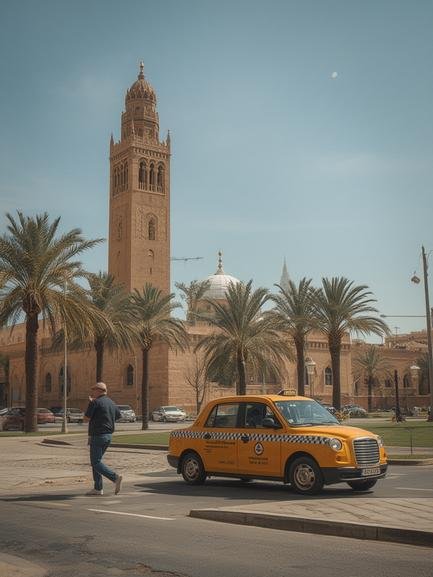
Understanding Rabat taxi services is essential for efficient and stress-free exploration of Morocco’s captivating capital. From the blue petit taxis crisscrossing the city to the white grand taxis connecting Rabat with neighboring towns, these services offer flexibility and convenience at reasonable prices. While public transportation options like trams and buses are available, taxis provide the most direct and personalized way to experience Rabat’s diverse attractions. By following the guidelines in this guide and embracing the local transportation culture, you’ll navigate the city with confidence and enjoy authentic interactions with Moroccan transportation options and their operators. Don’t hesitate to strike up a conversation with your driver—it might lead to unexpected insights and recommendations that make your Rabat experience truly memorable.
FAQs
Are Rabat taxis safe for tourists?
Yes, taxis in Rabat are generally safe for tourists. Petit taxis are regulated and numbered. For added security, note the taxi number, use licensed taxis from designated stands, and consider using taxi-hailing apps, which track your journey.
How much should I tip taxi drivers in Rabat?
Tipping is not mandatory but appreciated. Most locals round up the fare to the nearest 5 dirhams. For exceptional service or help with luggage, adding 5-10 dirhams is considered generous.
Do Rabat taxi drivers speak English?
Most taxi drivers in Rabat speak Arabic and French, with limited English. Having your destination written in Arabic or French, or saved on a map app, can help overcome language barriers.
Can I hire a taxi for a full day of sightseeing?
Yes, you can negotiate with petit taxi drivers for a half-day or full-day rate. Expect to pay around 300-500 dirhams for a full day, depending on the distance covered and waiting time required.
Are credit cards accepted in Rabat taxis?
No, most traditional taxis in Rabat only accept cash. Have small bills ready, as drivers often don’t carry much change. Taxi-hailing apps like Careem may offer in-app payment options.