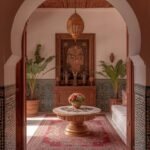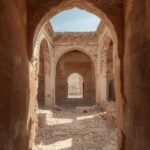

Have you ever wandered through narrow alleyways where centuries of history whisper from every stone? Rabat’s medina offers precisely this enchanting experience, drawing visitors into a labyrinth of authentic Moroccan culture and heritage. Unlike its more famous counterparts in Marrakech or Fes, the ancient walled city in Morocco’s capital provides a more relaxed yet equally fascinating glimpse into traditional North African urban design.
For travelers seeking to experience Moroccan architecture without overwhelming crowds, this UNESCO World Heritage site presents a perfect balance of historical immersion and peaceful exploration, making it an essential stop on any Moroccan itinerary.
History & Cultural Background
Founded in the 12th century during the Almohad dynasty, Rabat’s medina has witnessed centuries of transformation under various rulers. Sultan Yacoub al-Mansour initially established it as a ribat (fortress) to launch jihad against Spain. The medina gained prominence in the 17th century when Andalusian Muslims expelled from Spain settled here, bringing their distinctive architectural styles and craftsmanship.
Unlike other Moroccan imperial cities, Rabat’s historic core remained relatively unchanged until the French Protectorate (1912-1956), when colonial administrators created the adjacent Ville Nouvelle (New City) while preserving the medina’s authentic character. This dual development gave Rabat its unique urban identity, with the medina serving as a living museum of pre-colonial Moroccan life juxtaposed against the European-influenced new city.
Architectural Highlights & Key Features
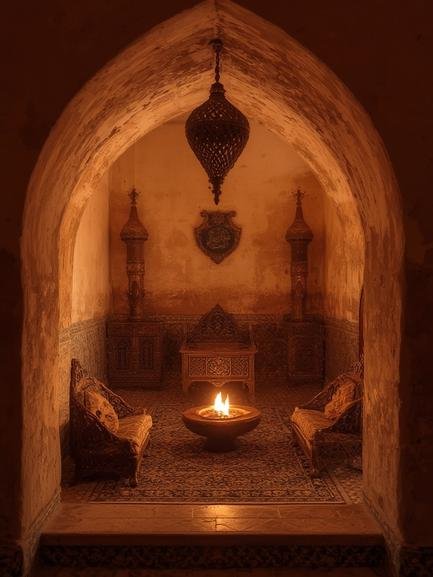
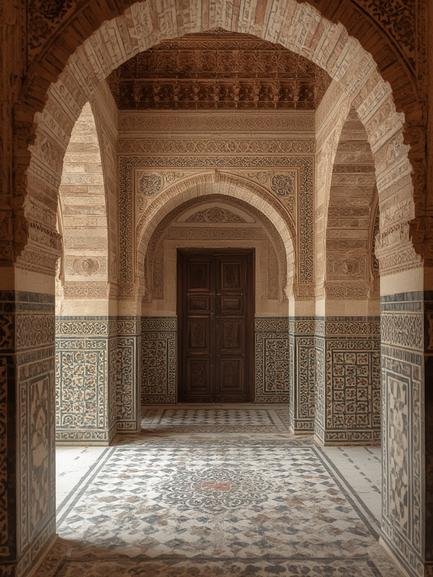
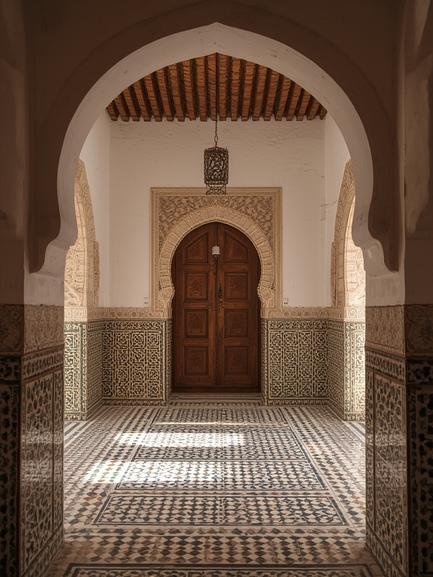
The medina is enclosed by impressive defensive walls that date back to the Almohad period, with several monumental gates (babs) providing access to the interior. The Andalusian influence is evident in the whitewashed houses with blue and green accents, ornate doorways, and internal courtyards hidden behind modest exteriors.
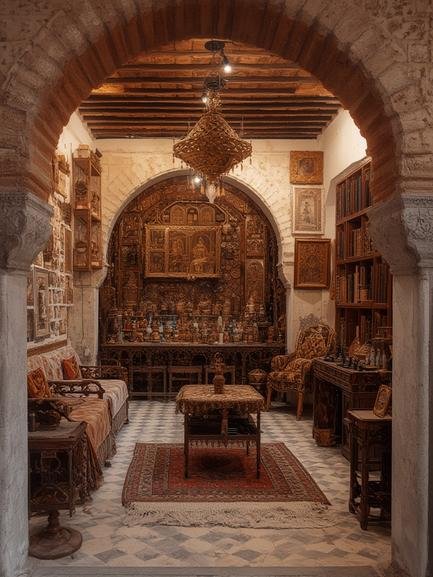
Unlike the palatial riads of Marrakech or the extensive souks of Fes, Rabat’s medina is characterized by its human scale and functional spaces. The Rue Souka serves as the main commercial artery, lined with shops selling traditional crafts, particularly Rabat’s famous hand-woven carpets with distinctive geometric patterns. The Mellah (former Jewish quarter) features slightly different architectural elements, showcasing Morocco’s multicultural heritage.
What makes Rabat’s medina particularly special is its proximity to the Kasbah des Oudaias, a picturesque fortress-within-a-fortress offering stunning views over the Atlantic Ocean and Bou Regreg River—an advantage not found in inland medinas.
Best Time to Visit & Practical Information
Visit between April and May or September and October for pleasant temperatures without summer crowds. The medina is accessible 24/7, but shops typically open from 9 AM to 7 PM, closing briefly for Friday prayers. Many craftsmen close on Sundays.
Entry to the medina itself is free, though the nearby Kasbah Museum charges 10 dirhams (approximately $1). No specific dress code exists, but modest clothing is appreciated, especially when visiting religious sites.
The medina is easily reached by petit taxi from anywhere in Rabat (approximately 20 dirhams). For a cultural immersion, consider staying in a riad within the medina walls. From the Rabat-Ville train station, it’s a pleasant 15-minute walk through the modern city to the medina entrance.
Step-by-Step Exploration Guide
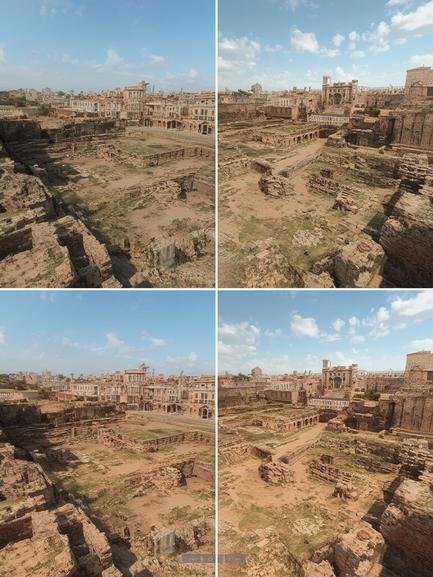
1. Bab El Had Gateway—Begin your journey through this main entrance on the western wall. Notice the impressive carved stonework, and take a moment to orient yourself with the medina map often displayed nearby.
2. Rue Souka—Follow this main commercial street, sampling local sweets like chebakia or browsing leather goods and textiles. This is where you’ll experience the true essence of Rabat medina‘s daily life.
3. Consuls Street—Veer right onto this historic lane where foreign representatives once resided. The buildings showcase some of the finest examples of Moroccan architecture with their intricate plasterwork and cedar wood details.
4. Artisan Quarter—Explore the workshops where craftsmen continue centuries-old traditions. Stop to watch carpet weavers, whose techniques haven’t changed for generations.
5. Mellah—Discover the former Jewish quarter with its slightly different architectural style, featuring balconies and larger windows.
6. Exit via Bab Bouiba—Conclude your medina tour at this northeastern gate, perfectly positioned to continue to the adjacent Kasbah des Oudaias.
Nearby Attractions, Food & Accommodation
Within walking distance, visit Hassan Tower, Mohammed V Mausoleum, and Chellah Necropolis for a complete historical circuit. The Kasbah des Oudaias, with its Andalusian Garden and stunning ocean views, makes for a perfect complement to your medina exploration.
For authentic dining, try Dinarjat for traditional Moroccan cuisine in a restored medina house, or sample street food at communal tables in the small squares. For budget travelers, Café Clock offers fusion dishes in a cultural setting.
Stay at Riad Zyo for luxury accommodation within the medina walls, Dar El Kébira for mid-range comfort in a historical setting, or Medina Surfing Association for budget-friendly rooms with a community atmosphere.
Travel Tips & Common Mistakes to Avoid
1. Don’t rush through in one hour—allow at least half a day to appreciate the subtle details and hidden corners.
2. Avoid relying solely on Google Maps, as many small alleys aren’t accurately mapped. Getting slightly lost is part of the charm!
3. Negotiate politely but firmly when shopping—expect to pay about 60% of the initial asking price.
4. Visit the carpet cooperative for fixed-price authentic Rabat carpets if you’re concerned about haggling.
5. Carry small denominations of dirhams for purchases and keep valuables secure in front pockets or hidden pouches.
Conclusion
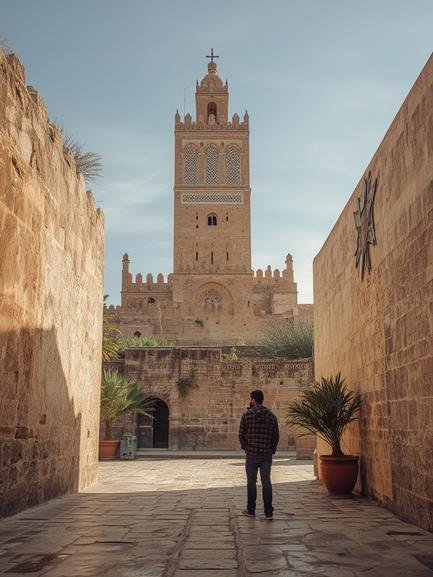
The Rabat medina offers a perfect introduction to Morocco’s imperial cities—compact enough to explore thoroughly yet authentic enough to provide genuine cultural insights. Its harmonious blend of Andalusian influence and traditional Moroccan architecture creates a living museum where centuries of North African urban development remain remarkably preserved. Whether you’re seeking photogenic blue-and-white alleyways, authentic craft workshops, or simply a glimpse into daily Moroccan life away from tourist crowds, Rabat’s ancient heart delivers an experience that will linger in your memory long after your journey ends. Save this guide for your next Moroccan adventure, and don’t forget to share your favorite medina discoveries in the comments below!
FAQs
Is Rabat medina safe for solo female travelers?
Yes, Rabat medina is considered one of Morocco’s safest ancient cities for all travelers, including solo women. Exercise normal precautions, dress modestly, and avoid isolated areas after dark.
How long should I spend exploring Rabat’s medina?
Allocate at least 3-4 hours to fully appreciate the medina. Combine it with the adjacent Kasbah des Oudaias for a full-day itinerary.
Are there restrictions on photography in the medina?
Photography of architecture and streets is welcomed, but always ask permission before photographing individuals, especially women. Some shopkeepers may expect a small purchase if you photograph their goods.
Is Rabat medina wheelchair accessible?
The medina presents challenges for wheelchair users due to narrow streets, occasional steps, and cobblestones. Some main thoroughfares are navigable, but many atmospheric alleys may be inaccessible.
What unique souvenirs can I find in the Rabat medina?
Rabat is renowned for its hand-woven carpets with distinctive geometric patterns, high-quality leather goods, and unique pottery with blue and gray designs that differ from those found in other Moroccan cities.